What shapes lift selection in Knoxville
Project geometry comes first: where the task sits relative to the machine, the clearance between racking or structure, and the travel path from staging to work. In Knoxville, the second filter is the environment—ridge-and-valley slopes, soft soils after heavy rain, and temperature swings that affect exterior timing.
- Interior work in local distribution buildings often favors slab-rated electric scissors with compact footprints and tight turning. The constraint is aisle width, floor loading, and the need to work under sprinklers or duct runs.
- Outdoor work on uneven grades around industrial sites points toward rough-terrain platforms with higher ground clearance and wider stance. The constraint is slope across the work zone and how quickly ground firms up after rain.
How we organize comparisons
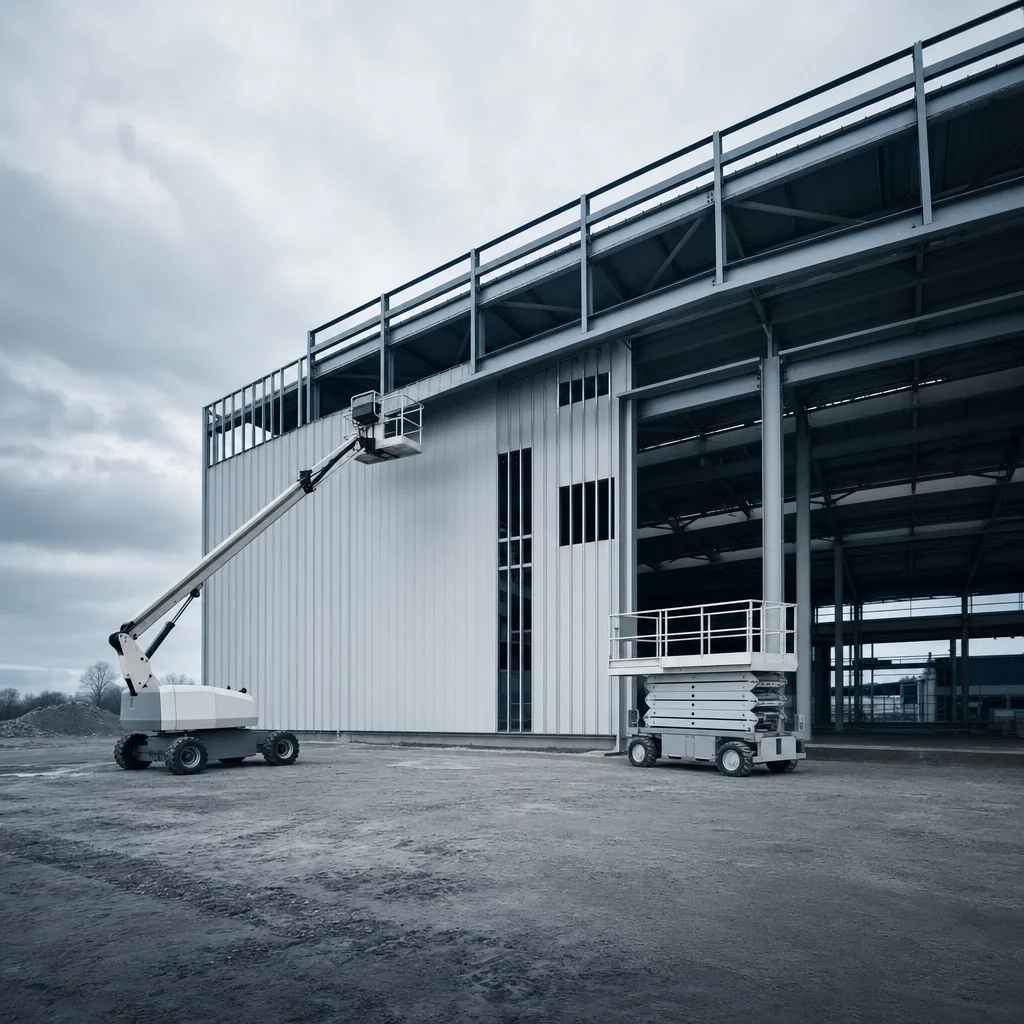
We break down choices by platform type and surface condition rather than brand. The key question is: can the machine sit below the task, or must it reach out and over an obstacle? That splits scissor platforms from booms. From there, slab versus rough-terrain options depend on concrete versus mixed ground and the approach path. See category primers at /electric-scissor-lift-rental/, /rough-terrain-scissor-lift-rental/, and /boom-lift-rental/.
Local conditions that move the needle
- Ridge-and-valley sites create cross-slope exposure that can disqualify slab machines outdoors even on compacted pads.
- Frequent summer thunderstorms leave surface water and softer subgrades, which can affect tire type and allowable approach paths.
- Large interior facilities use narrow travel lanes and mezzanines that limit platform width and height combinations.
What this site is—and is not
We publish planning guidance and category checklists. Actual conditions, the selected unit's instructions, and site procedures govern exterior or elevated work. For questions about equipment categories or to discuss a specific job profile, start at /products/ or reach out via /contact/.