Matching telehandlers to Knoxville jobsites
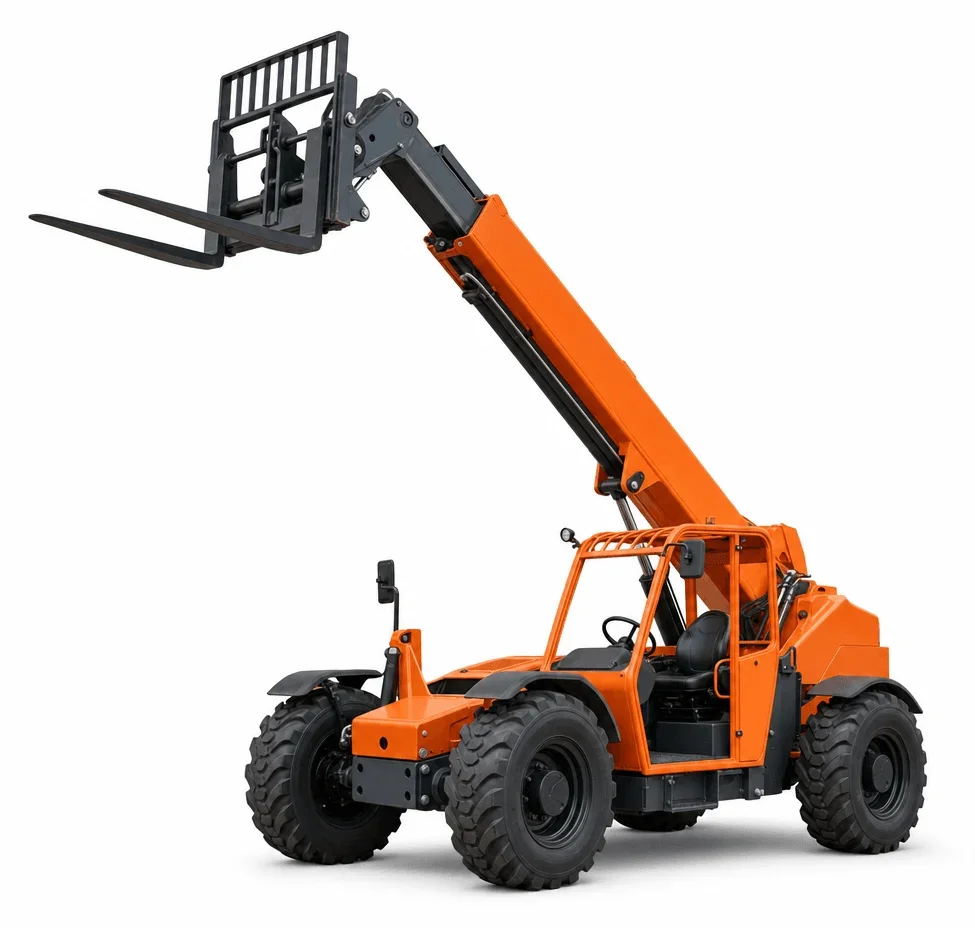
The region’s hilly development and mixed soils put ground approach at the center of planning. Telehandlers handle uneven routes better than warehouse forklifts and can extend loads onto decks or into bays. If the task is limited to flat slab inside a distribution building, compare to /forklift-rental/ for tighter aisles and lower clearances.
Key variables: - Load type and weight envelope across the full lift cycle - Maximum set height and required forward reach from the edge of the pad or slab - Travel distance over slopes between laydown and structure
Terrain, weather, and pad conditions
Frequent summer storms and year-round moisture can soften subgrades. Confirm whether the machine will travel on compacted gravel, stabilized soil, or slab. Follow the selected unit’s instructions and site procedures for slope, stability, and attachment ratings. For remote pads or temporary power needs, see /generators-light-towers-rental/.
Boom geometry and placement accuracy
Telehandlers place loads beyond the edge of decks, masonry lines, and elevated frames. Plan for setback to avoid edge loading, and confirm the lift chart at the chosen reach and height. For long, aerial access to install elements rather than place loads, compare to /telescopic-boom-lift-rental/ or /articulating-boom-lift-rental/.
Knoxville logistics patterns
- Metal building erection: Move panel bundles from laydown to bays across graded pads.
- Campus renovations: Navigate tight service courts with variable slopes.
- Suburban commercial sites: Handle deliveries where crane access is limited by overhead lines or staging space.
For on-site storage and perimeter planning, visit /storage-containers-rental/ and /temporary-fencing-barricades-rental/.